

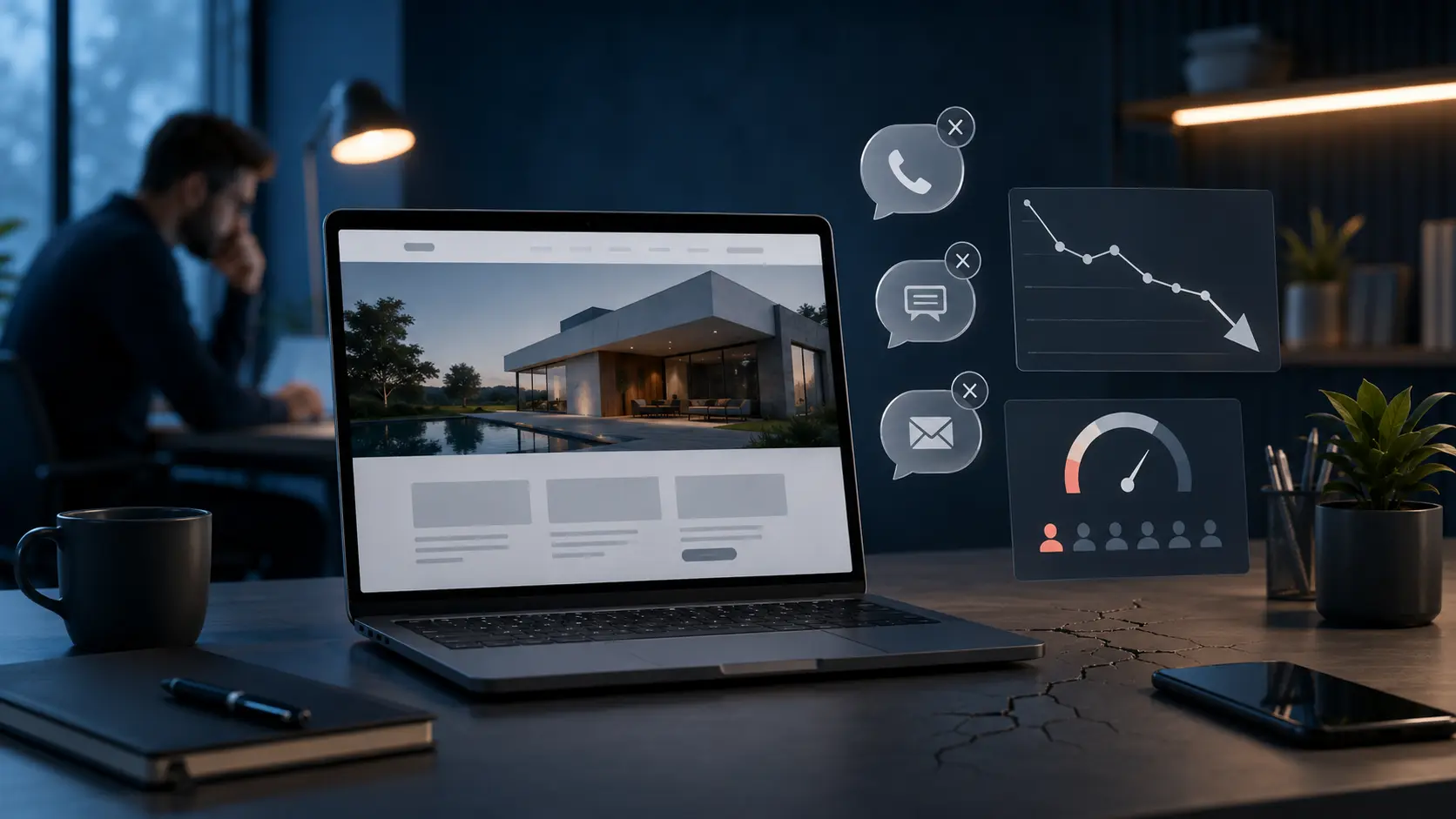
Many business owners feel disappointed after launching a website.
The website is live. It looks decent. The link is added to Instagram, Google Business Profile, and visiting cards. But after weeks or months, the enquiries are still low.
This is more common than people think.
A website does not generate enquiries just because it exists. It generates enquiries when the right people find it, understand it, trust it, and know what to do next.
If your website is not getting calls, WhatsApp messages, bookings, or form submissions, the problem may not be your business. The problem may be how your website is structured.
1. Your Homepage Does Not Explain the Business Clearly
The homepage should answer three questions quickly:
What do you offer?
Who is it for?
Why should someone choose you?
Many websites start with generic lines like “Welcome to our company” or “We provide the best services.” These lines do not build clarity.
A strong homepage should immediately communicate the business value. A hotel should highlight comfort, location, safety, parking, and nearby routes. A school should highlight learning environment, curriculum, safety, and values. A café should highlight ambience, food, gatherings, and location.
Clarity creates trust.
2. Your Website Looks Good But Feels Generic
A generic website does not create confidence.
If the same design and content could belong to any business, it will not help your brand stand out. Visitors should feel that your website reflects your actual business, location, personality, and service quality.
Premium design is not about adding too many effects. It is about creating a clean, intentional, trustworthy experience that matches your brand.
3. Your Calls-to-Action Are Weak
Many websites hide their enquiry buttons.
A visitor should not struggle to contact you. Phone, WhatsApp, booking, form, or consultation buttons should be visible at the right places.
The call-to-action should also be specific. Instead of only saying “Submit,” use action-driven text like “Request a Quote,” “Book a Stay,” “Schedule a Visit,” “Send Enquiry,” or “Talk to Us.”
A small change in CTA clarity can improve enquiry flow.
4. Your Website Is Not Built for Local Search
If your business depends on local customers or travellers, your website must support location-based searches.
For example, people do not only search “hotel.” They search “hotel near Kathgodam Railway Station,” “family hotel in Haldwani,” “café in Bhimtal,” “school admission in Haldwani,” or “construction company near me.”
If your website does not include location-specific content, service pages, and local SEO signals, it may not appear for valuable searches.
5. Your Service Pages Are Too Thin
A service page with only a heading and three lines of text is not enough.
Visitors need information before they enquire. They want to understand what you offer, how it helps them, what makes you different, and why they should trust you.
Strong service pages should include details, benefits, process, FAQs, location relevance, proof, and clear CTAs.
Thin pages reduce both trust and SEO strength.
6. Your Mobile Experience Is Weak
Most local searches happen on mobile.
If your website looks broken, loads slowly, has small text, poor spacing, difficult navigation, or hidden buttons on mobile, users will leave quickly.
A website should not only be responsive technically. It should feel easy to use on a phone.
This means clear text, visible buttons, fast loading, simple navigation, and clean section flow.
7. Your Website Does Not Build Enough Trust
Before enquiring, people look for trust signals.
These can include testimonials, photos, case studies, Google reviews, client logos, project details, service proof, team information, location details, certifications, FAQs, and clear contact information.
If your website does not answer the silent doubts in the visitor’s mind, they may leave without contacting you.
8. Your Content Is Written for You, Not the Customer
Many websites talk too much about the business and too little about the customer’s problem.
Instead of only saying what you do, your content should explain how you help, what problems you solve, and why that matters.
A construction brand should talk about trust, planning, quality, timelines, and reliability. A hotel should talk about comfort, location, safety, cleanliness, and travel convenience. A school should talk about learning, care, structure, discipline, and child development.
Customer-focused content performs better.
9. You Are Not Tracking What Matters
If you are not tracking calls, form submissions, WhatsApp clicks, traffic sources, and search performance, you are guessing.
Analytics and Search Console can help you understand where visitors come from, which pages get visibility, and where improvements are needed.
A website should keep improving after launch.
Final Thoughts
If your website is not getting enquiries, it does not always mean you need more ads or more traffic.
Sometimes, you need better structure, clearer content, stronger local SEO, improved trust, faster performance, and a smoother enquiry journey.
Your website should work like a business asset.
It should attract the right audience, explain your value, build confidence, and make action easy.
When strategy, design, development, SEO, and conversion flow work together, a website becomes much more than a digital visiting card. It becomes a system for trust and growth.
Leave a Reply