

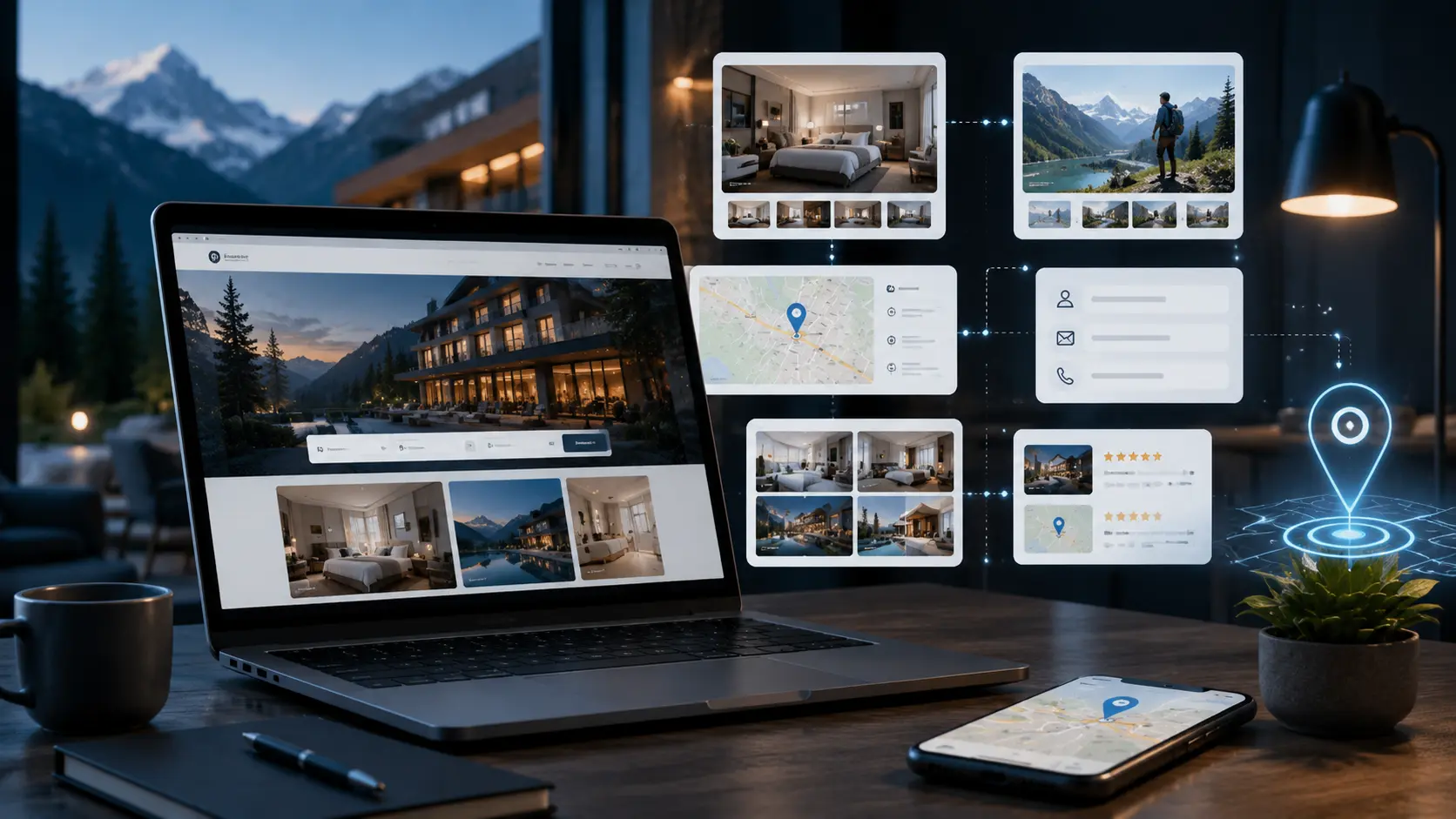
A hotel website should do more than show rooms and contact details.
For hotels, homestays, resorts, and boutique stays, the website plays a major role in trust, discovery, and booking enquiries. Travellers compare multiple properties before making a decision. They look for comfort, safety, location, rooms, parking, nearby routes, food, reviews, photos, and convenience.
If your website does not answer these questions clearly, potential guests may move to another property.
This is why hotel website development should combine design, content, local SEO, and conversion planning.
Why Hotels Need More Than a Basic Website
Many hotel websites are built with only a homepage, gallery, rooms, and contact page.
This may be enough for basic presence, but it is not enough for strong local SEO.
Travellers search with very specific intent. They may search for family hotel near a railway station, safe stay before visiting a tourist destination, hotel with parking, budget stay near a route, boutique homestay, or comfortable stay for weekend travellers.
If your website does not have content around these searches, you may miss high-intent traffic.
1. Homepage
The homepage should quickly communicate the property’s positioning.
A traveller should immediately understand what kind of stay you offer, where you are located, who it is ideal for, and why they should choose you.
A strong hotel homepage should include:
Property introduction
Location advantage
Room highlights
Safety and cleanliness
Nearby destinations
Guest benefits
Photos
Reviews
Booking or enquiry CTA
The homepage should not be overloaded, but it should create enough confidence to explore further.
2. Rooms Page
The rooms page is one of the most important pages on a hotel website.
Guests want to know what they are booking. Room photos, amenities, bedding details, occupancy, views, comfort, cleanliness, and pricing guidance should be presented clearly.
If you have multiple room categories, each category should have a dedicated section or page.
The goal is to reduce uncertainty.
3. Location Page
For local SEO, a hotel location page is very important.
This page should explain where the property is located, nearby landmarks, railway station or airport access, road connectivity, nearby tourist routes, parking, and travel convenience.
For example, hotels in areas like Kathgodam, Haldwani, Bhimtal, Nainital route, or Kainchi Dham route can benefit from location-specific content.
A traveller often chooses a property because of location convenience, not only room photos.
4. Nearby Attractions Page
Hotels near tourist regions should create helpful destination content.
A nearby attractions page can include places to visit, travel time, route guidance, who should visit, and how the property acts as a comfortable base.
This is useful for both users and search visibility.
For example, a hotel may create content around Nainital, Bhimtal, Mukteshwar, Kainchi Dham, Kathgodam Railway Station, or local experiences.
5. Family Stay Page
Families have different concerns.
They look for safety, cleanliness, spacious rooms, food options, parking, peaceful surroundings, and easy access.
A dedicated family stay page can help hotels rank for family-focused searches and build trust with parents, senior citizens, and group travellers.
6. Safety and Cleanliness Page
Safety and cleanliness are major decision factors.
A hotel website should not only claim that it is safe and clean. It should explain how the property maintains cleanliness, staff support, secure surroundings, parking, guest assistance, and hygiene standards.
This kind of content is especially useful for families, solo travellers, women travellers, and senior citizens.
7. Food and Dining Page
If the property has an in-house restaurant, café, breakfast service, or dining arrangement, it deserves a dedicated page.
Food is part of the stay experience.
This page can include menu highlights, dining ambience, breakfast details, local food, room service, café seating, or family dining.
8. Event or Group Stay Page
Hotels, resorts, and homestays that handle groups should have pages for events, family gatherings, small celebrations, corporate stays, retreats, or wedding guests.
These pages can attract high-value enquiries.
A simple room listing may not communicate this potential.
9. Blog Section
A blog section helps hotels build topical authority around travel, local destinations, routes, safety, stay guides, and seasonal tourism.
Good blog topics include:
Where to stay before visiting Kainchi Dham
Best stay near Kathgodam Railway Station
Why stay in Haldwani before going to Nainital
Safe hotel for families travelling to Uttarakhand
Travel guide for Bhimtal and nearby places
Blogs can support both user education and search visibility.
Final Thoughts
Hotel website development is not just about design. It is about creating a digital experience that helps travellers make decisions.
A strong hotel website should answer questions before the guest asks them.
It should show the property clearly, explain location advantages, support local SEO, build trust, and make booking or enquiry simple.
For hotels, homestays, and resorts, a well-planned website can become one of the strongest assets for visibility, credibility, and direct enquiries.
Leave a Reply